
At the end of the G7 summit, the Federal Chancellor expressed his "great satisfaction with the entire process". The heads of state and government of the Group of Seven (G7) reached conclusions on seven topics in Canada from 15 to 18 June. Here you can see the G7 summit in pictures.

Kananaskis, 16 June 2025: The G7 summit is the highlight of every presidency of the Group of Seven (G7). Federal Chancellor Friedrich Merz has travelled to Canada for the summit. There he was welcomed by Prime Minister Mark Carney and his wife.

"We will begin today with the general state of the global economy," said Federal Chancellor Merz at the start. We will address the extent to which the conflicts in the Middle East and the war in Ukraine are impacting economic development.

Especially in difficult times, it is important to remain in close dialogue. The G7 – as an association of leading economies and democracies – is a central and proven format for this dialogue.

In addition to Canada and Germany, France, Italy, the UK, Japan and the USA are all part of the G7. The European Union is also a member. Commission President Ursula von der Leyen is taking part in the talks on behalf of the EU.

In between sessions, there will be time for personal dialogue in small groups and bilateral discussions. Among others, Federal Chancellor Friedrich Merz spoke with French President Emmanuel Macron.
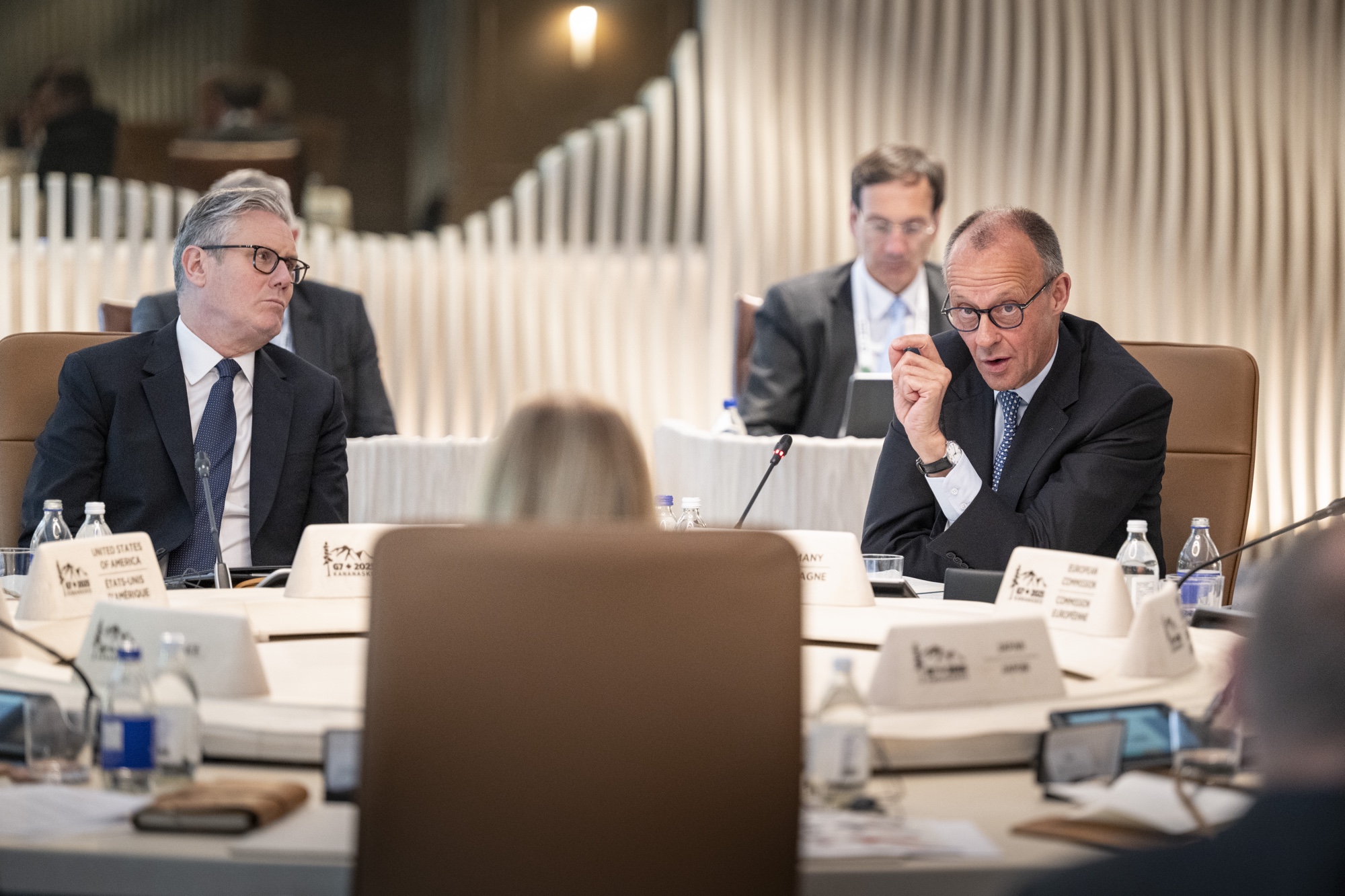
Chancellor Merz sees the summit as "an opportunity for important talks during very challenging times."

Ukraine, the Middle East, the global economy and artificial intelligence – these and other topics were on the agenda of the G7 heads of state and government in Canada.

Germany advocated joint action to tackle global challenges.

On the first day of the summit, the G7 agreed on a joint declaration on the war between Israel and Iran. It emphasises Israel's right to self-defence. The heads of state and government also stated that they had always made it unequivocally clear that Iran must never have a nuclear weapon.

17 June 2025: Before returning to the summit venue, Chancellor Merz conducted interviews with German television stations in the morning. He expressed his understanding regarding US President Trump's early departure due to the situation in the Middle East: "We have spoken at length about all the subjects to be addressed at this summit."

On the second day of the meeting, discussions once again turned to, amongst other things, the conflicts in the Middle East and Ukraine.

Ukrainian President Volodymyr Zelenskyy travelled to the summit to take part in the discussions.

There was a consensus both in the Group of Seven and in the European Union: "We will continue to support Ukraine militarily," said Merz after the talks.

The "Global Economic Outlook" was the topic for discussion in one of the working sessions. The G7 countries published a total of seven joint declarations, including declarations on migration, AI and key raw materials.