
Federal Chancellor Merz at the informal European Council meeting in Dublin
As part of his visit to Ireland, Federal Chancellor Friedrich Merz attended the meeting of heads of state and government in Dublin. In addition to the main topic of “artificial intelligence”, the Member States also discussed issues relating to the EU budget and Ukraine.
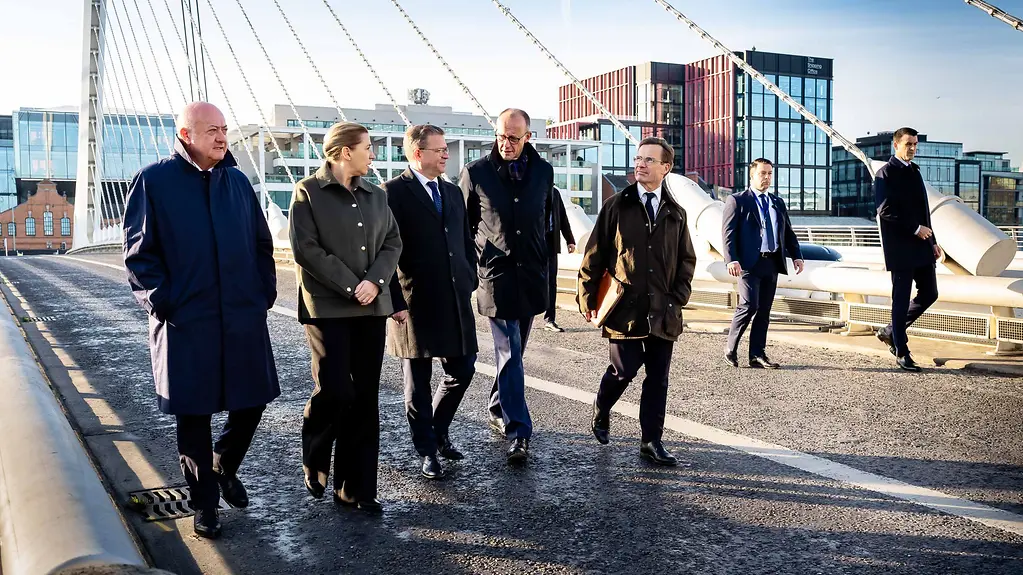
“Support for Ukraine is, and will remain, in the interest of all Europeans”, said Federal Chancellor Merz in Dublin.
Photo: Federal Government/Jesco Denzel
Discussions in Dublin centred on the latest developments in Russia’s war of aggression against Ukraine. “Some progress” had been made in the peace talks, the Chancellor said in his statement at Friday’s informal European Council meeting, affirming that Europe would have a seat at the table in future. He noted the readiness to continue discussions in the coming week on a unified EU position in the negotiations, as well as on funding for Ukraine. The Coalition of the Willing will then meet in Berlin.
European security as a joint endeavour
On the fringes of the meetings, the Federal Chancellor also took the opportunity to discuss the next Multiannual Financial Framework (MFF) with EU partners. Chancellor Merz received a great deal of support for his linking of the EU budget with collective funding for Ukraine. For the Federal Government, European security is closely linked to the defence of Ukraine, and the Chancellor noted that one of the priorities in the next Multiannual Financial Framework should be support for European security policy from all EU Member States in a spirit of “solidarity”. At the meeting in Dublin, the Chancellor therefore also strongly advocated providing financial support to Ukraine as the joint responsibility of all Member States.
Artificial intelligence as a lever for European sovereignty
At the start of the meeting, the EU Member States also discussed the opportunities and risks associated with AI. The Chancellor is committed to ensuring that technological developments in Europe get even faster and better, with greater sovereignty and resilience. This means, on the one hand, harnessing the potential of AI to boost European competitiveness, but it is also important to ensure safe and responsible use. Strong EU-wide cooperation is crucial to achieving both objectives.
In the run-up to the informal European Council meeting, Chancellor Merz had already attended the meeting of the European Political Community in Dublin on Thursday, 12 November.
The regular meetings of the European Council, the body comprising the heads of state and government of the European Union, are supplemented by “informal” meetings. There are generally no official conclusions drawn at these meetings, but they do offer Member States a further opportunity to discuss pressing current issues that require additional time for deliberation.