
Germany
Christian Wulff is Germany's new Federal President. On Wednesday evening in the third round of voting, 625 of the 1,244 women and men from every corner of the country who make up the electoral college known as the Federal Convention voted for the 51-year-old. On Friday, the man who was until yesterday state premier in Lower Saxony is to be sworn in as the tenth President of the Federal Republic of Germany.

Before the voting: Angela Merkel and Christian Wulff
Photo: REGIERUNGonline/Kugler
The fourteenth Federal Convention met at midday to elect the new President of the Federal Republic of Germany, with four candidates to choose from. In the first two rounds of voting none of the candidates won the absolute majority required (623 votes). In the third round Christian Wulff was elected with 625 votes. In this third and final round 121 members of the Federal Convention abstained.
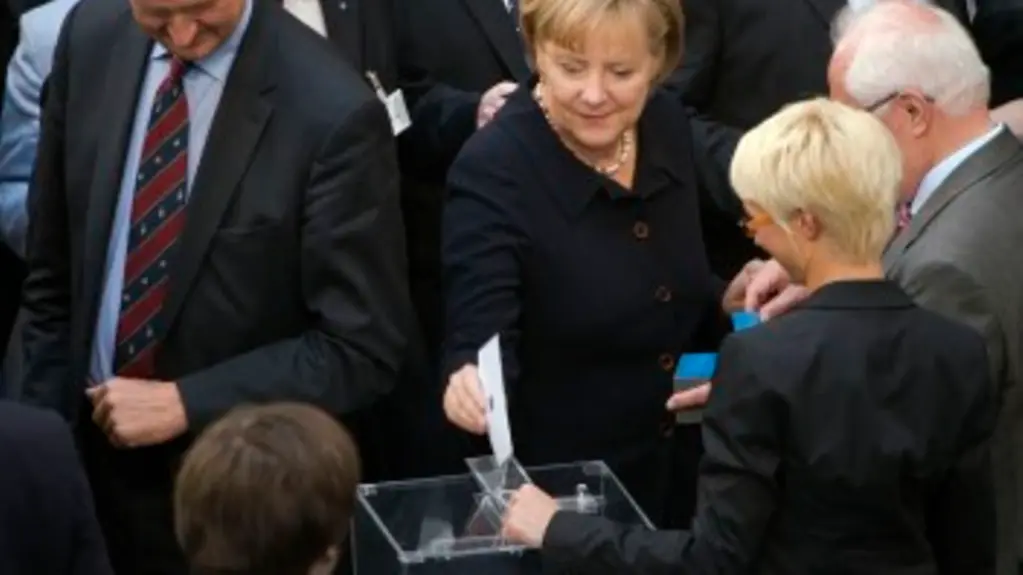
The Chancellor casts her vote
Photo: REGIERUNGonline/Bergmann
Christian Wulff accepted the result. Speaking to the members of the Federal Convention in the Reichstag in Berlin late on Wednesday evening he declared that he was looking forward to the new challenges. He would also be doing his best to meet the expectations of those who did not vote for him, he underscored.
Four candidates
Alongside Christian Wulff, the Lower Saxony state premier, who was the front-runner fielded by the CDU/CSU-FDP coalition, the SPD and the Greens nominated Joachim Gauck as their candidate. For ten years, as of 1990, Joachim Gauck headed the body in charge of the documents of the State Security Service, the former East German secret service. In the third round, he won 494 votes.
Another two candidates stood in the first two rounds, the television journalist Lukrezia Jochimsen who was proposed by "Die Linke" and an NPD candidate, the singer/songwriter Frank Rennicke. Both candidates withdrew before the final round of voting.
The members of the electoral college or Federal Convention: It is up to the Federal Convention to chose the President. It is made up of the members of the German Bundestag and by an equal number of representatives of the federal states, chosen from the state assemblies or senates of the individual states. Because the German Bundestag currently has 622 members, another 622 members of the Federal Convention represented the federal states. A total of 1,244 individuals thus came together as the Federal Convention to elect the new President.
The German Basic Law or constitution lays out the majority required. According to Article 54, paragraph 6 of the Basic Law, the candidate receiving the absolute majority of the votes of the Federal Convention is elected.
If no candidate manages to win an absolute majority in the first two rounds of voting, a simple majority is enough in the third round, i.e. the candidate winning the most votes will be elected. In this election for the tenth President of the Federal Republic of Germany, Christian Wulff in fact won the absolute majority in the third round.